EX-99.1 - CORPORATE PRESENTATION DATED NOVEMBER 9, 2026
Published on November 9, 2026

Prostate Nerve Reconstruction Investor Event November 9, 2026

Forward-looking Statements 2 This presentation contains “forward-looking” statements as defined in the Private Securities Litigation Reform Act of 1995, which are statements that are not historical facts and relate to future conditions, events, or results. These statements are based on management's current expectations or predictions of future conditions, events, or results based on various assumptions and management's estimates of trends and economic factors in the markets in which we are active, as well as our business plans. Words such as “expects,” “anticipates,” “objectives,” “intends,” “plans,” “believes,” “seeks,” “estimates,” “projects,” “forecasts,” “continue,” “may,” “should,” “will,” “goals,” and variations of such words and similar expressions are intended to identify such forward-looking statements. Forward-looking statements include, but are not limited to, statements related to: clinical development activities, our potential expansion into prostate applications, market development opportunities, our strategic investments, training and education initiatives, reimbursement and market access efforts, research and development activities, and market acceptance and adoption. Actual results or events could differ materially from those described in any forward-looking statements as a result of various factors, including, without limitation, risks related to product development and product potential, clinical outcomes, regulatory processes, reimbursement and market access, surgeon adoption, market acceptance, and data validation, as well as those risk factors described under Part I, Item 1A., “Risk Factors,” of our most recent Annual Report on Form 10-K, subsequent Quarterly Reports on Form 10-Q, and other filings made from time to time with the Securities and Exchange Commission. Forward-looking statements are not a guarantee of future performance, and actual results may differ materially from those projected. Forward-looking statements speak only as of the date they are made and, except as required by applicable law, we assume no responsibility to publicly update or revise any forward-looking statements.
3 Michael Dale President and Chief Executive Officer
To restore health and improve quality of life by making restoration of peripheral nerve function an expected standard of care. Our Mission 4
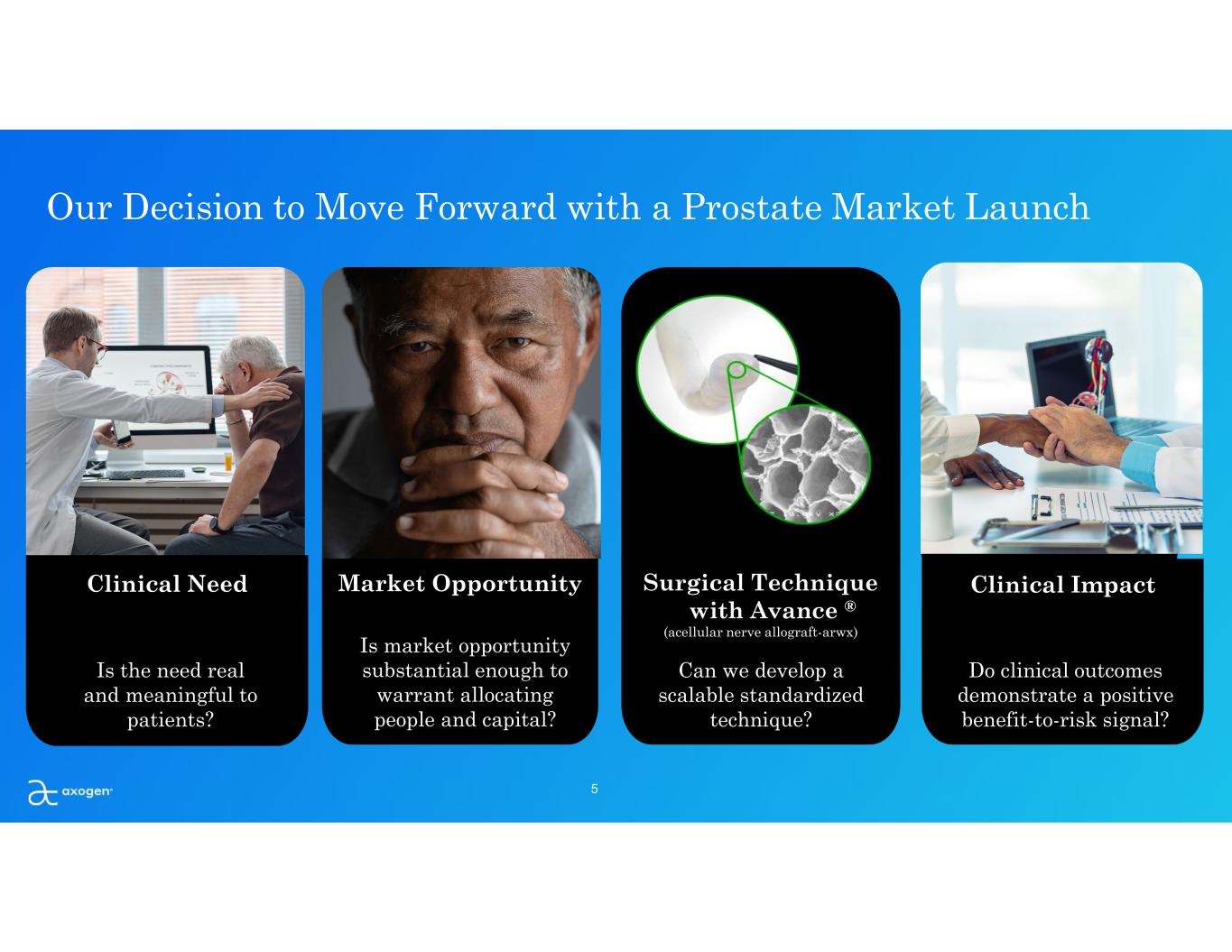
Our Decision to Move Forward with a Prostate Market Launch Market Opportunity 5 Surgical Technique with Avance ® (acellular nerve allograft-arwx) Clinical ImpactClinical Need Is the need real and meaningful to patients? Is market opportunity substantial enough to warrant allocating people and capital? Can we develop a scalable standardized technique? Do clinical outcomes demonstrate a positive benefit-to-risk signal?

6 Jens Kemp Chief Marketing Officer
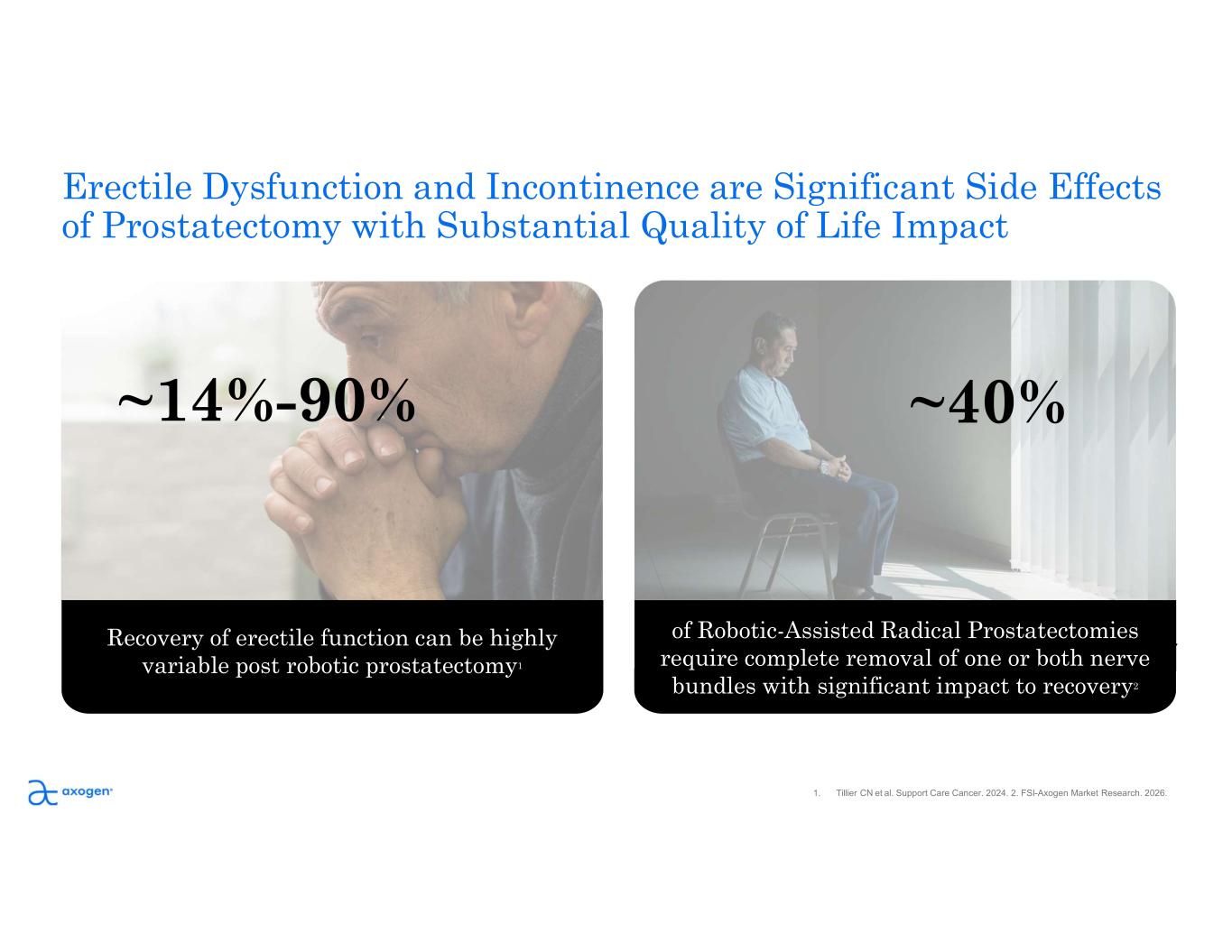
Erectile Dysfunction and Incontinence are Significant Side Effects of Prostatectomy with Substantial Quality of Life Impact 7 ~14%-90% of Robotic-Assisted Radical Prostatectomies require complete removal of one or both nerve bundles with significant impact to recovery2 ~40% Recovery of erectile function can be highly variable post robotic prostatectomy1 1. Tillier CN et al. Support Care Cancer. 2024. 2. FSI-Axogen Market Research. 2026.
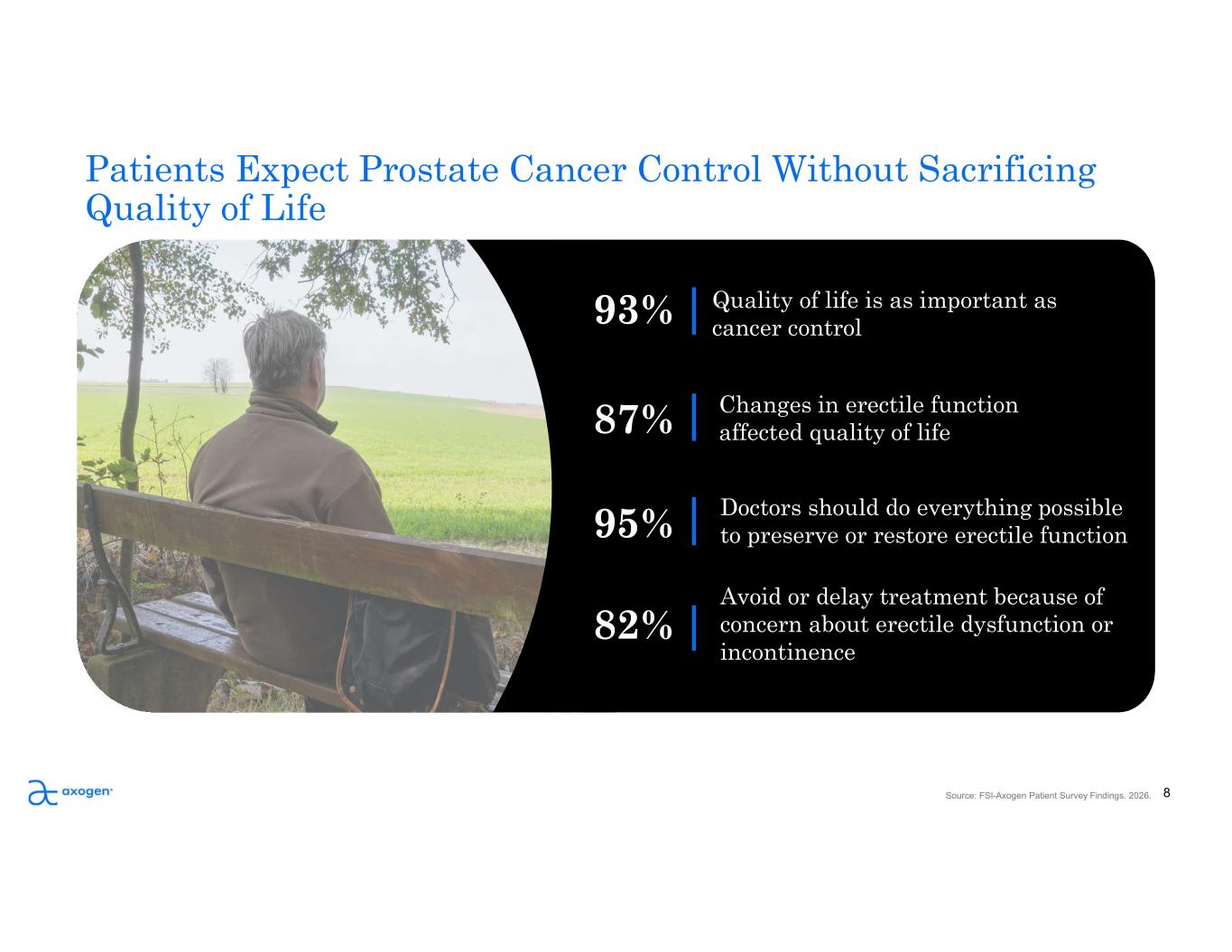
8 Patients Expect Prostate Cancer Control Without Sacrificing Quality of Life 87% Changes in erectile function affected quality of life 95% Doctors should do everything possible to preserve or restore erectile function 93% Quality of life is as important as cancer control 82% Avoid or delay treatment because of concern about erectile dysfunction or incontinence Source: FSI-Axogen Patient Survey Findings. 2026.
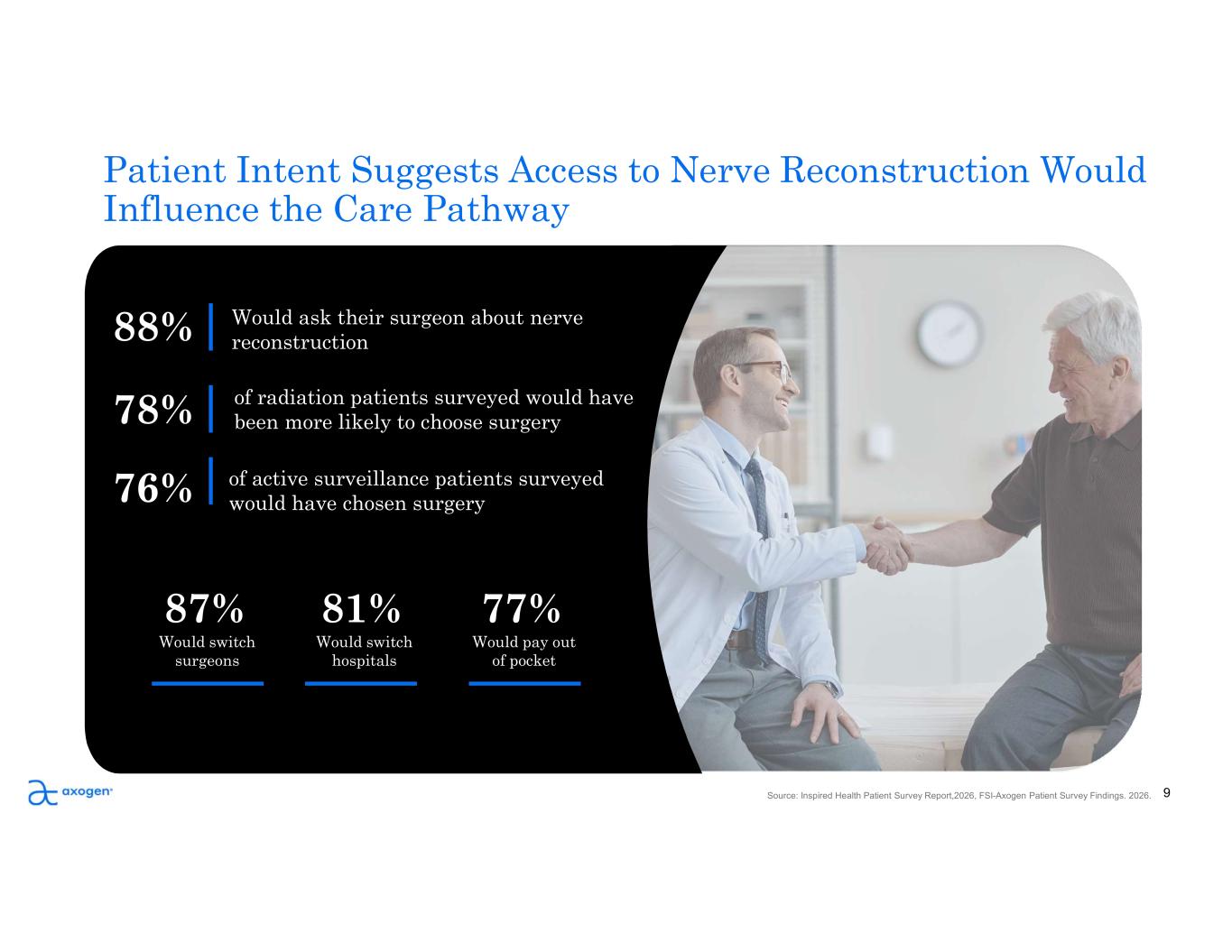
9 Patient Intent Suggests Access to Nerve Reconstruction Would Influence the Care Pathway 78% of radiation patients surveyed would have been more likely to choose surgery 76% of active surveillance patients surveyed would have chosen surgery 88% Would ask their surgeon about nerve reconstruction 87% Would switch surgeons 81% Would switch hospitals 77% Would pay out of pocket Source: Inspired Health Patient Survey Report,2026, FSI-Axogen Patient Survey Findings. 2026.
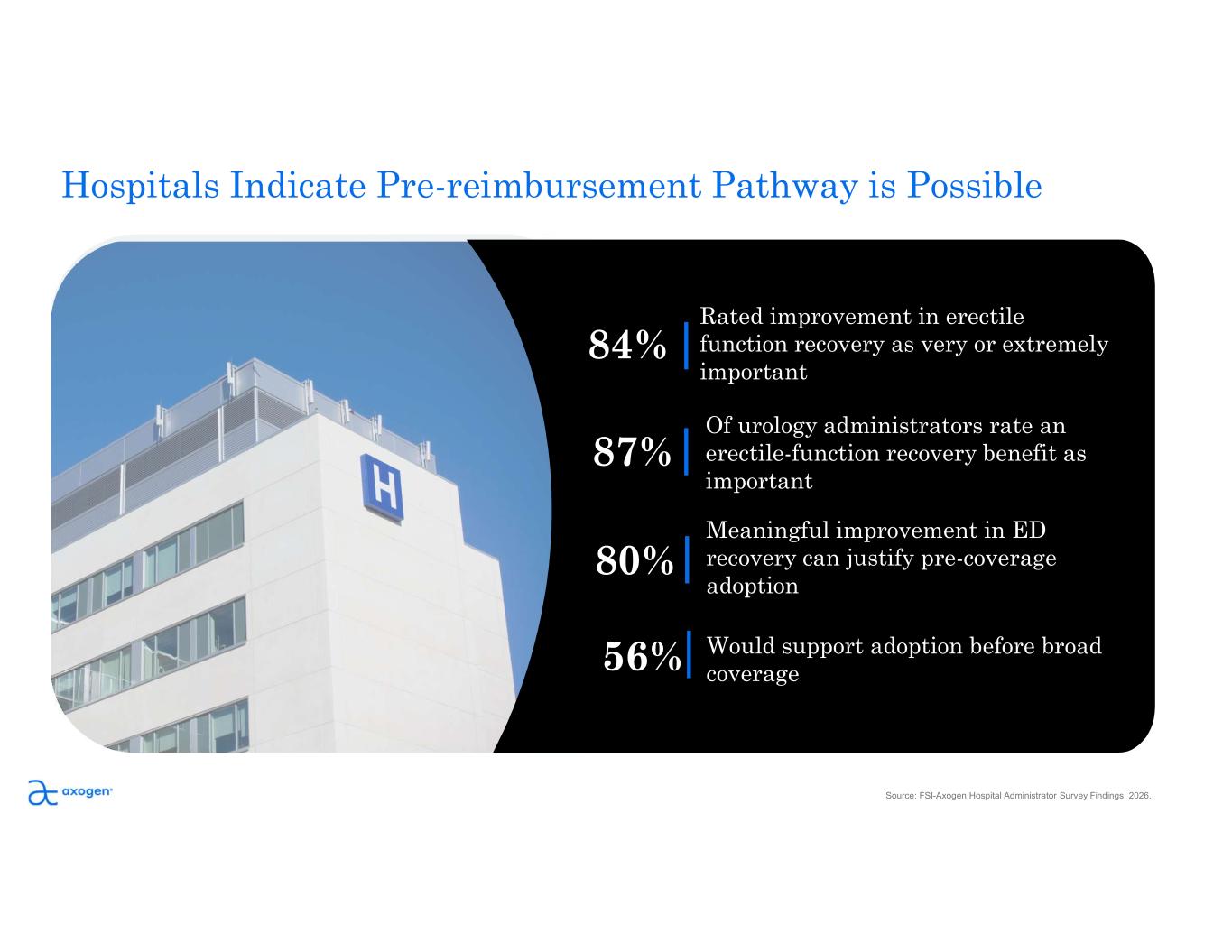
Hospitals Indicate Pre-reimbursement Pathway is Possible 80% Meaningful improvement in ED recovery can justify pre-coverage adoption 84% Rated improvement in erectile function recovery as very or extremely important 56% Would support adoption before broad coverage 87% Of urology administrators rate an erectile-function recovery benefit as important Source: FSI-Axogen Hospital Administrator Survey Findings. 2026.
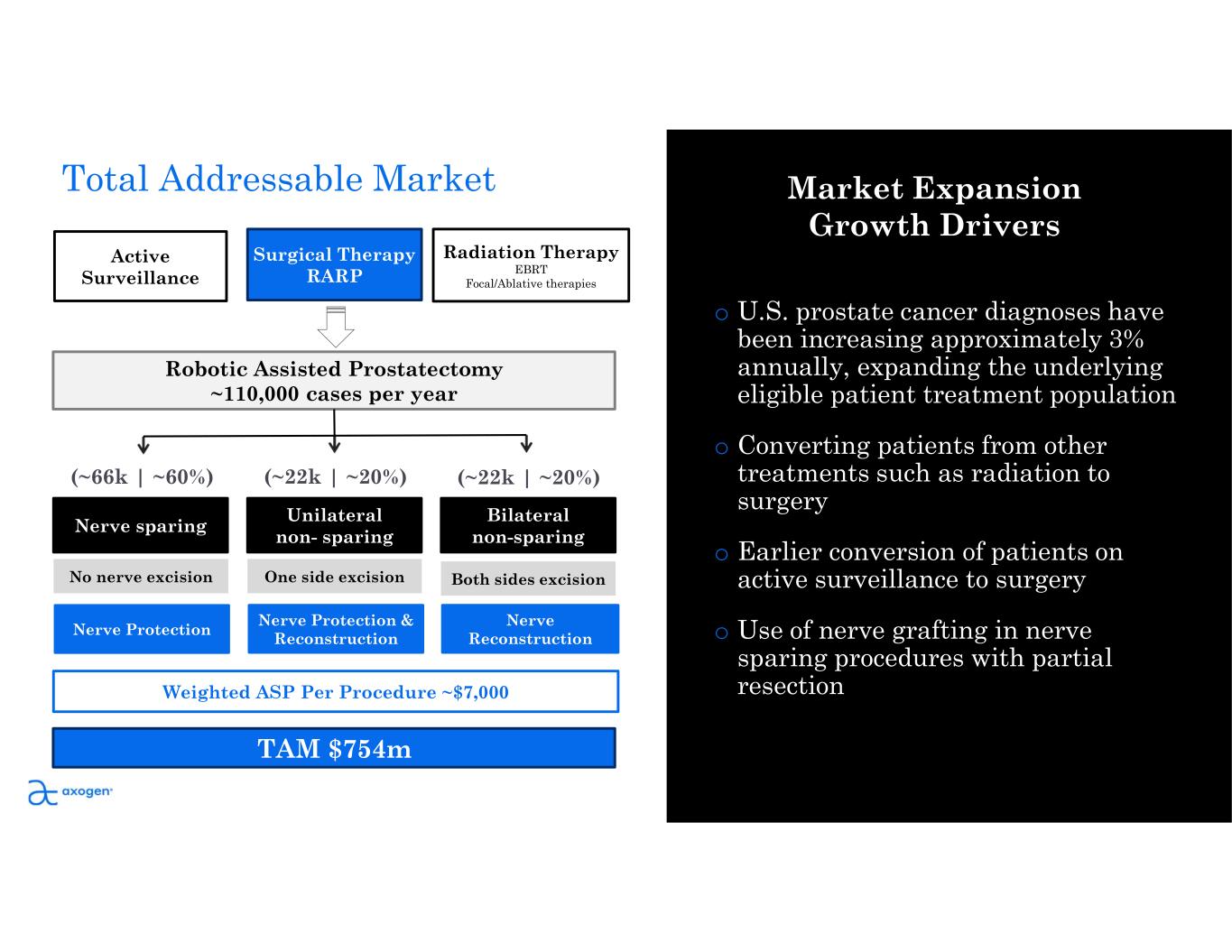
Total Addressable Market 11 Active Surveillance Radiation Therapy EBRT Focal/Ablative therapies Surgical Therapy RARP Robotic Assisted Prostatectomy ~110,000 cases per year (~66k | ~60%) Nerve sparing Unilateral non- sparing (~22k | ~20%) Bilateral non-sparing (~22k | ~20%) Nerve Protection Nerve Protection & Reconstruction Nerve Reconstruction No nerve excision One side excision Both sides excision Weighted ASP Per Procedure ~$7,000 TAM $754m Market Expansion Growth Drivers o U.S. prostate cancer diagnoses have been increasing approximately 3% annually, expanding the underlying eligible patient treatment population o Converting patients from other treatments such as radiation to surgery o Earlier conversion of patients on active surveillance to surgery o Use of nerve grafting in nerve sparing procedures with partial resection
12 Erick DeVinney Chief Scientific Officer
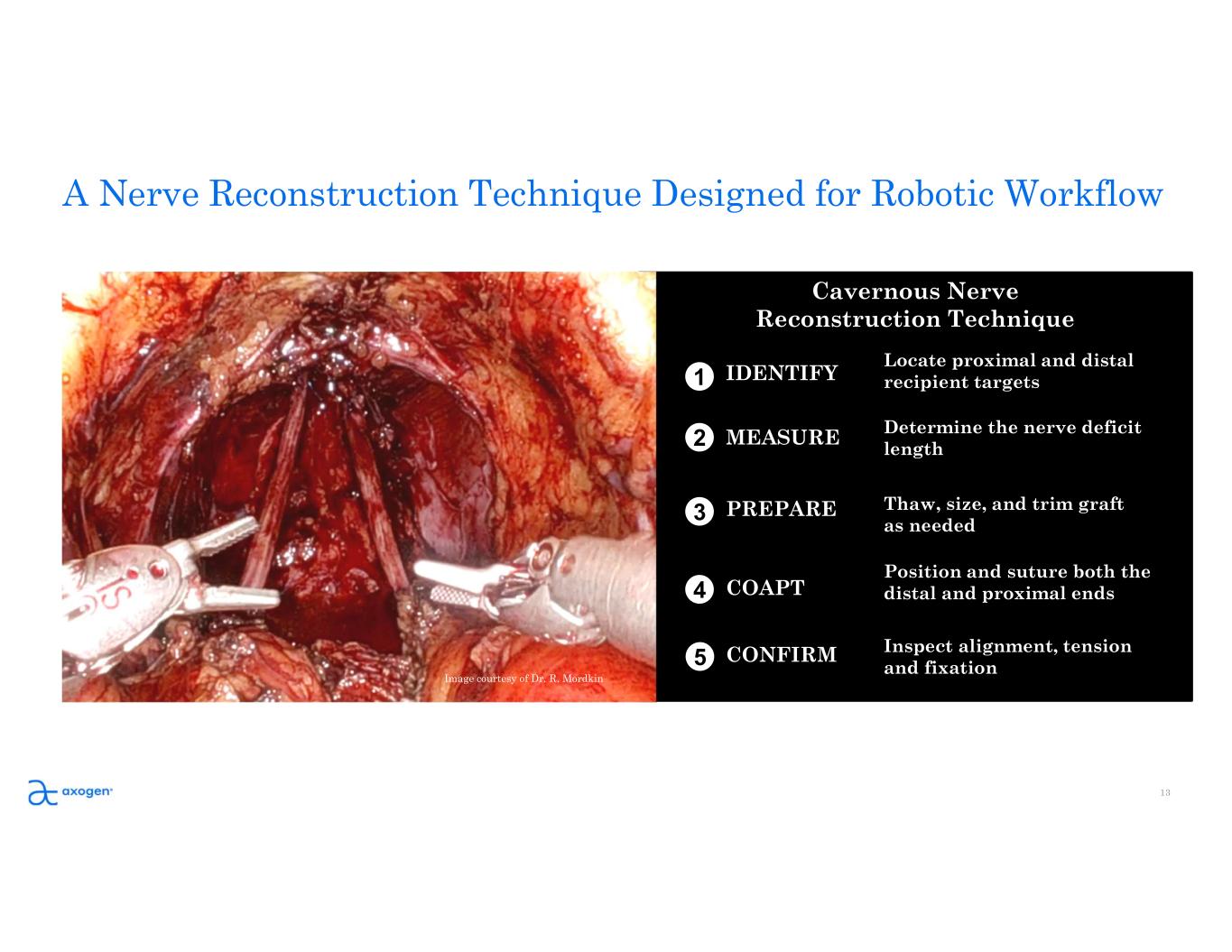
COAPT A Nerve Reconstruction Technique Designed for Robotic Workflow 13 Locate proximal and distal recipient targetsIDENTIFY Determine the nerve deficit lengthMEASURE Thaw, size, and trim graft as needed PREPARE Position and suture both the distal and proximal ends Inspect alignment, tension and fixation CONFIRM Image courtesy of Dr. R. Mordkin 1 2 3 4 5 Cavernous Nerve Reconstruction Technique
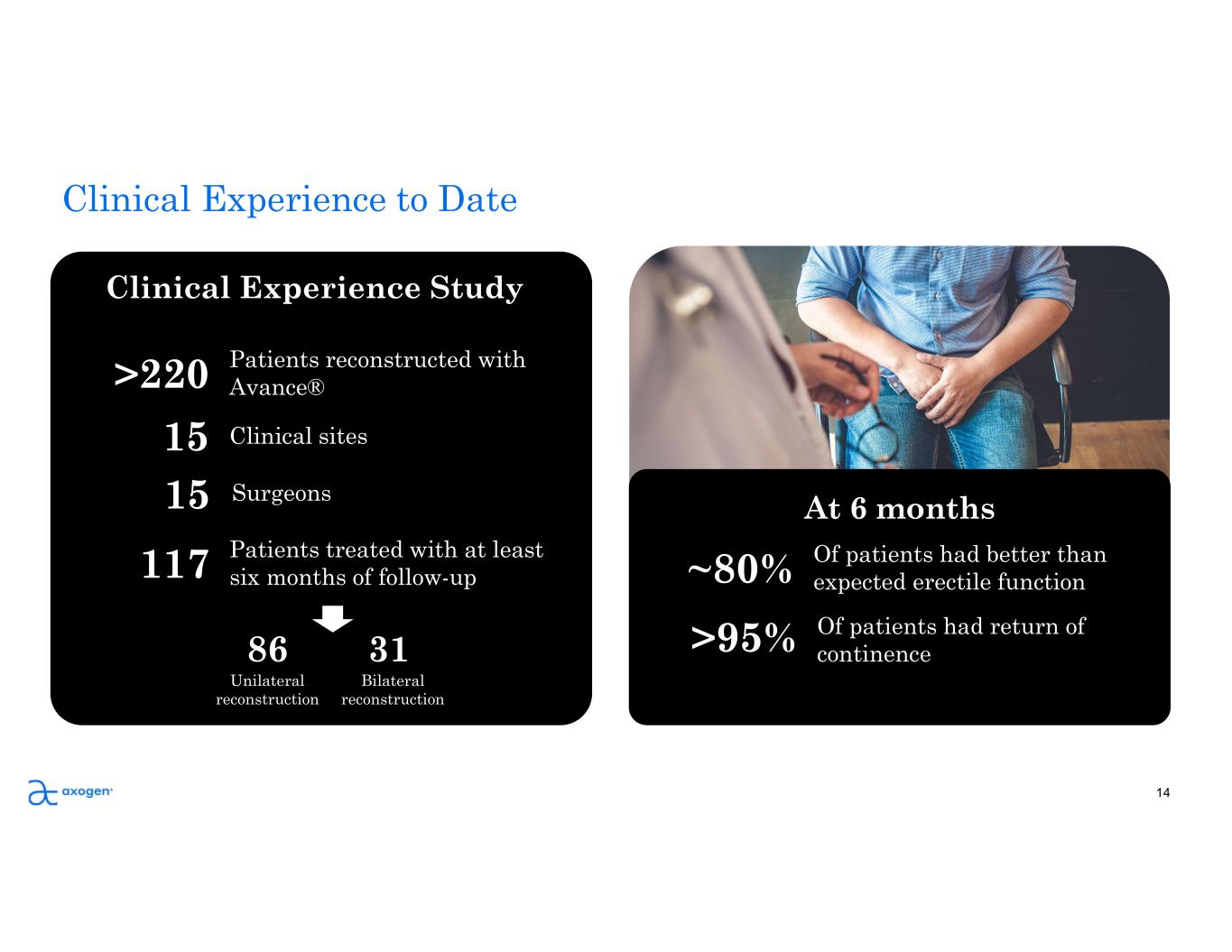
Clinical Experience to Date 14 At 6 months . >220 Patients reconstructed with Avance® 117 Patients treated with at least six months of follow-up 86 Unilateral reconstruction 31 Bilateral reconstruction ~80% Of patients had better than expected erectile function >95% Of patients had return of continence 15 Clinical sites 15 Surgeons Clinical Experience Study
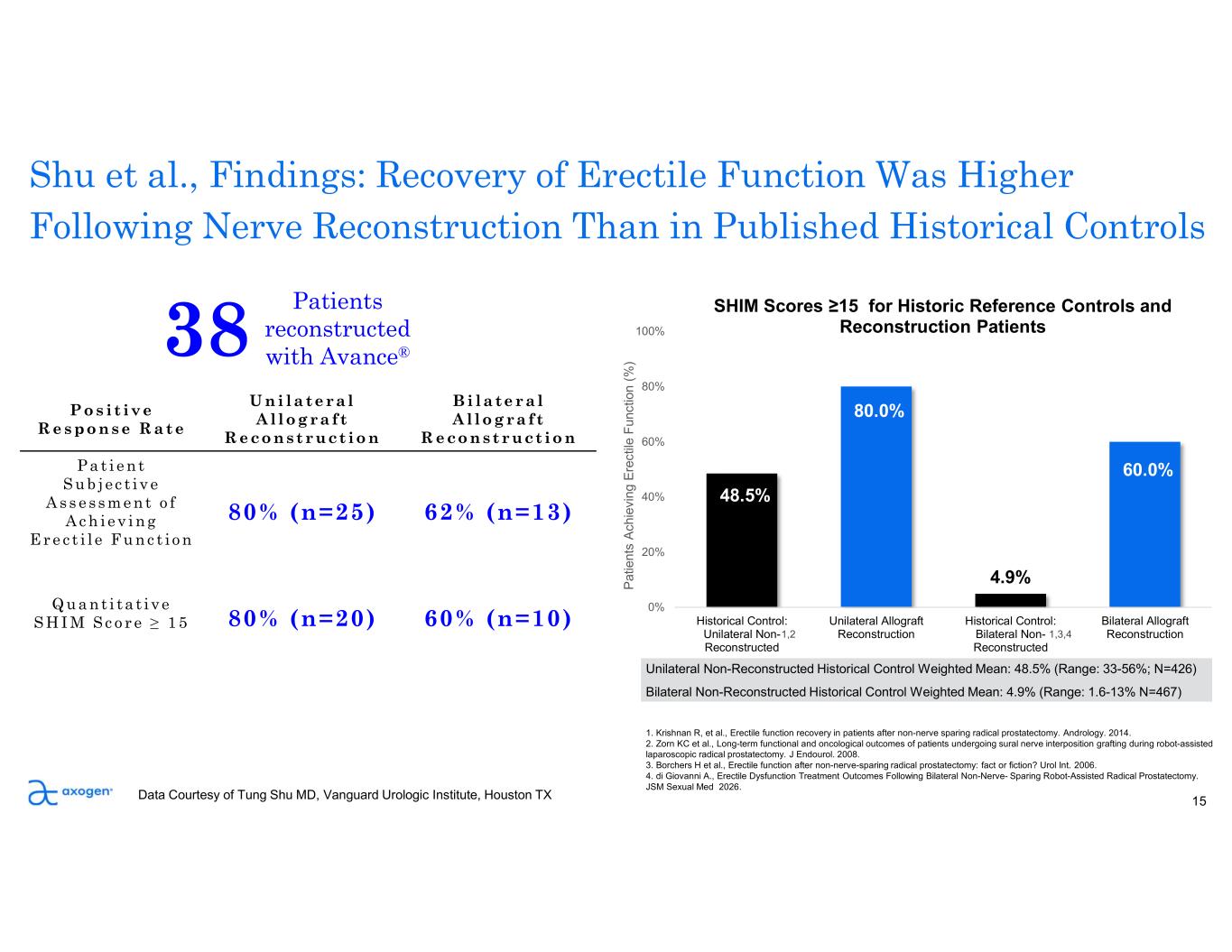
Shu et al., Findings: Recovery of Erectile Function Was Higher Following Nerve Reconstruction Than in Published Historical Controls 15Data Courtesy of Tung Shu MD, Vanguard Urologic Institute, Houston TX 48.5% 80.0% 4.9% 60.0% 0% 20% 40% 60% 80% 100% Historical Control: Unilateral Non- Reconstructed Unilateral Allograft Reconstruction Historical Control: Bilateral Non- Reconstructed Bilateral Allograft Reconstruction P at ie nt s A ch ie vi ng E re ct ile F un ct io n (% ) SHIM Scores ≥15 for Historic Reference Controls and Reconstruction Patients 1. Krishnan R, et al., Erectile function recovery in patients after non-nerve sparing radical prostatectomy. Andrology. 2014. 2. Zorn KC et al., Long-term functional and oncological outcomes of patients undergoing sural nerve interposition grafting during robot-assisted laparoscopic radical prostatectomy. J Endourol. 2008. 3. Borchers H et al., Erectile function after non-nerve-sparing radical prostatectomy: fact or fiction? Urol Int. 2006. 4. di Giovanni A., Erectile Dysfunction Treatment Outcomes Following Bilateral Non-Nerve- Sparing Robot-Assisted Radical Prostatectomy. JSM Sexual Med 2026. 1,2 1,3,4 38 Patients reconstructed with Avance® 25 Unilateral reconstruction 13 Bilateral reconstruction Patients with Subjective Assessment of Erectile Function Positive Response Rate 80% 62% B i l a te r a l A l l o g ra f t R e c o n s t ru c t i o n U n i l a t e ra l A l l o g ra f t R e c o n s t ru c t i o n P o s i t iv e R e s p o n s e R a t e 62% (n=13)80% (n=25) P a t i e n t S u b j e c t i v e A s s e ssm e n t o f A c h i e v i n g E r e c t i l e F u n c t i o n 60% (n=10)80% (n=20) Q u a n t i t a t i v e S H I M S c o r e ≥ 1 5 Unilateral Non-Reconstructed Historical Control Weighted Mean: 48.5% (Range: 33-56%; N=426) Bilateral Non-Reconstructed Historical Control Weighted Mean: 4.9% (Range: 1.6-13% N=467)
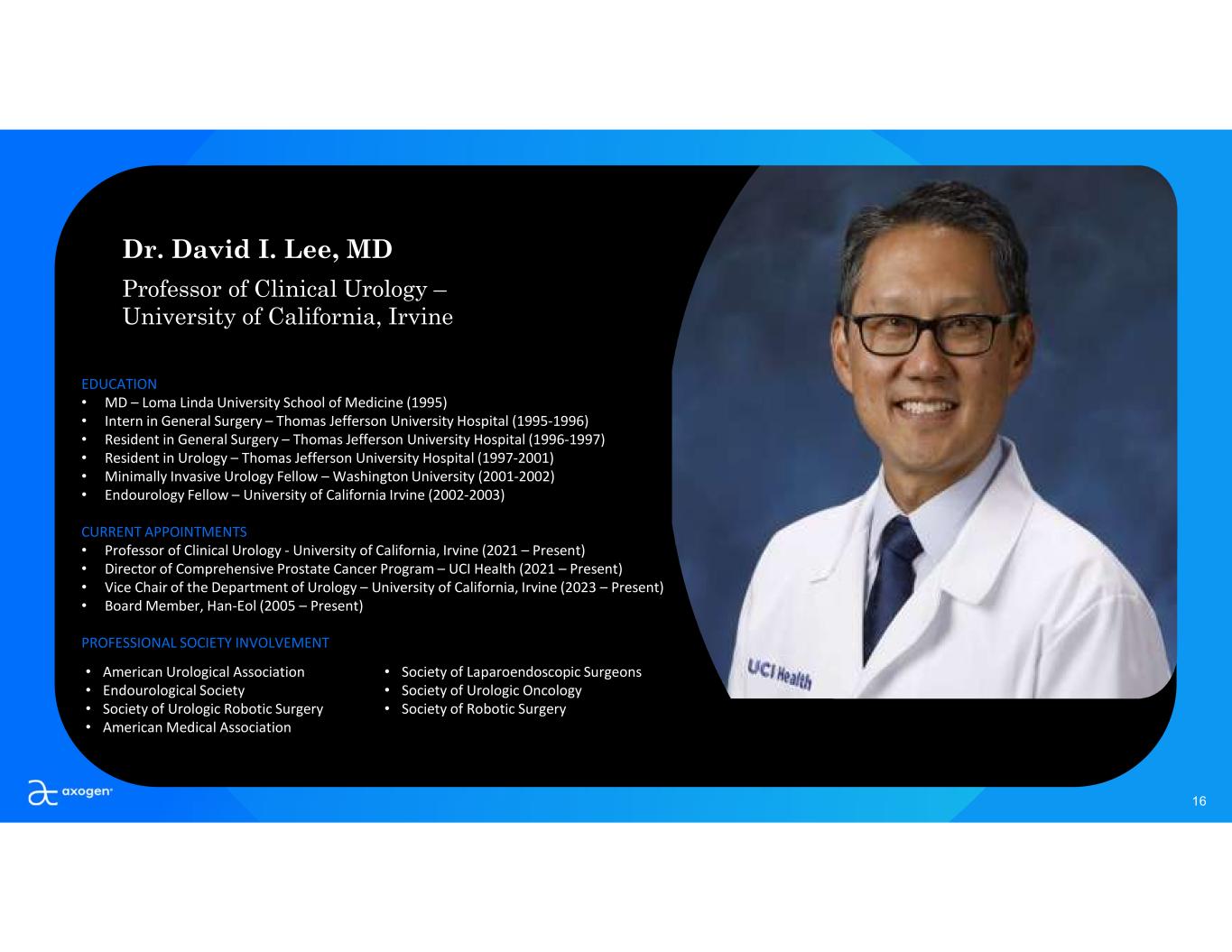
Dr. David I. Lee, MD Professor of Clinical Urology – University of California, Irvine EDUCATION • MD – Loma Linda University School of Medicine (1995) • Intern in General Surgery – Thomas Jefferson University Hospital (1995-1996) • Resident in General Surgery – Thomas Jefferson University Hospital (1996-1997) • Resident in Urology – Thomas Jefferson University Hospital (1997-2001) • Minimally Invasive Urology Fellow – Washington University (2001-2002) • Endourology Fellow – University of California Irvine (2002-2003) CURRENT APPOINTMENTS • Professor of Clinical Urology - University of California, Irvine (2021 – Present) • Director of Comprehensive Prostate Cancer Program – UCI Health (2021 – Present) • Vice Chair of the Department of Urology – University of California, Irvine (2023 – Present) • Board Member, Han-Eol (2005 – Present) PROFESSIONAL SOCIETY INVOLVEMENT • American Urological Association • Endourological Society • Society of Urologic Robotic Surgery • American Medical Association • Society of Laparoendoscopic Surgeons • Society of Urologic Oncology • Society of Robotic Surgery 16
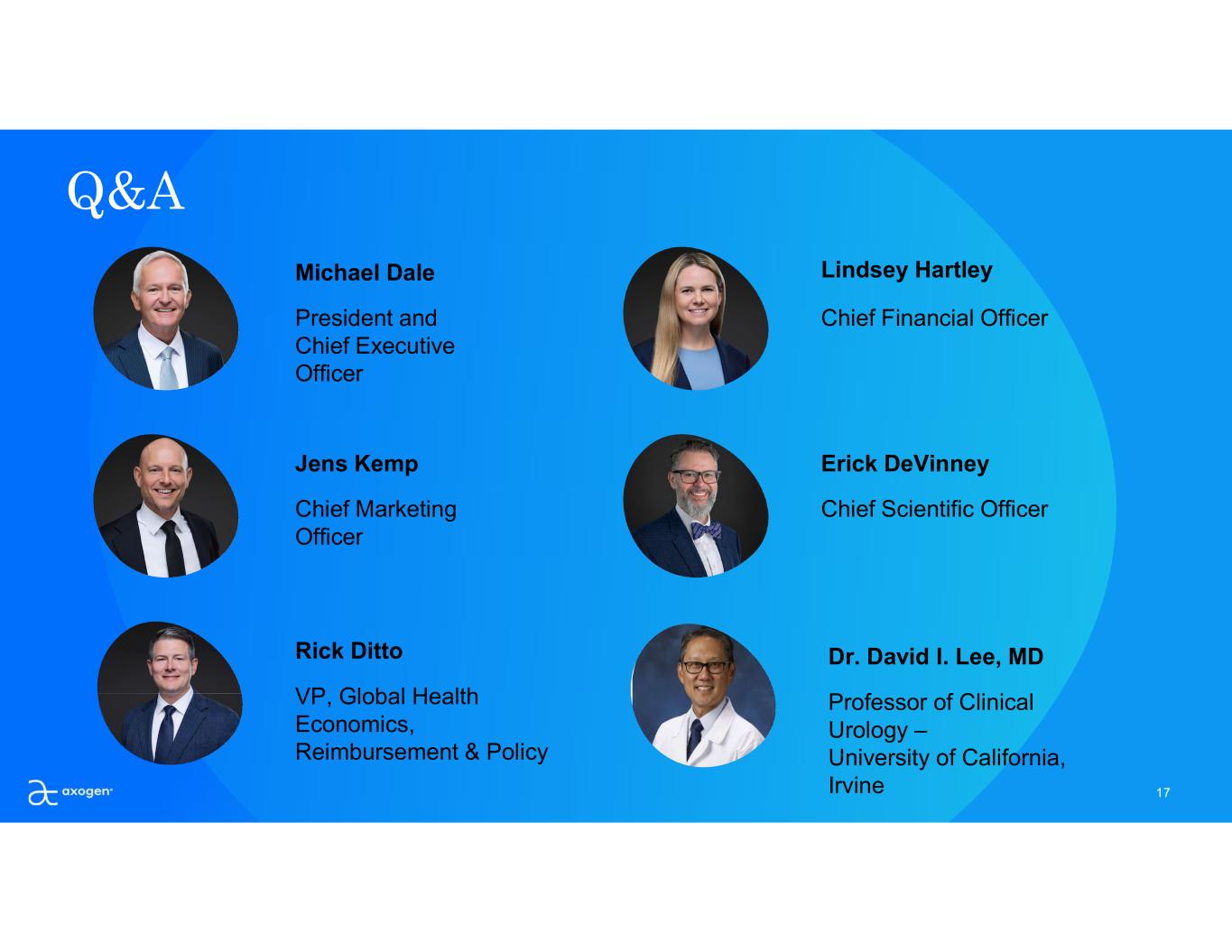
Q&A 17 President and Chief Executive Officer Michael Dale Chief Marketing Officer Jens Kemp Chief Scientific Officer Erick DeVinney Chief Financial Officer Lindsey Hartley VP, Global Health Economics, Reimbursement & Policy Rick Ditto Professor of Clinical Urology – University of California, Irvine Dr. David I. Lee, MD
Thank you © 2026 Axogen Corporation. All rights reserved. The stylized "a" logo is a registered trademark of Axogen Corporation.